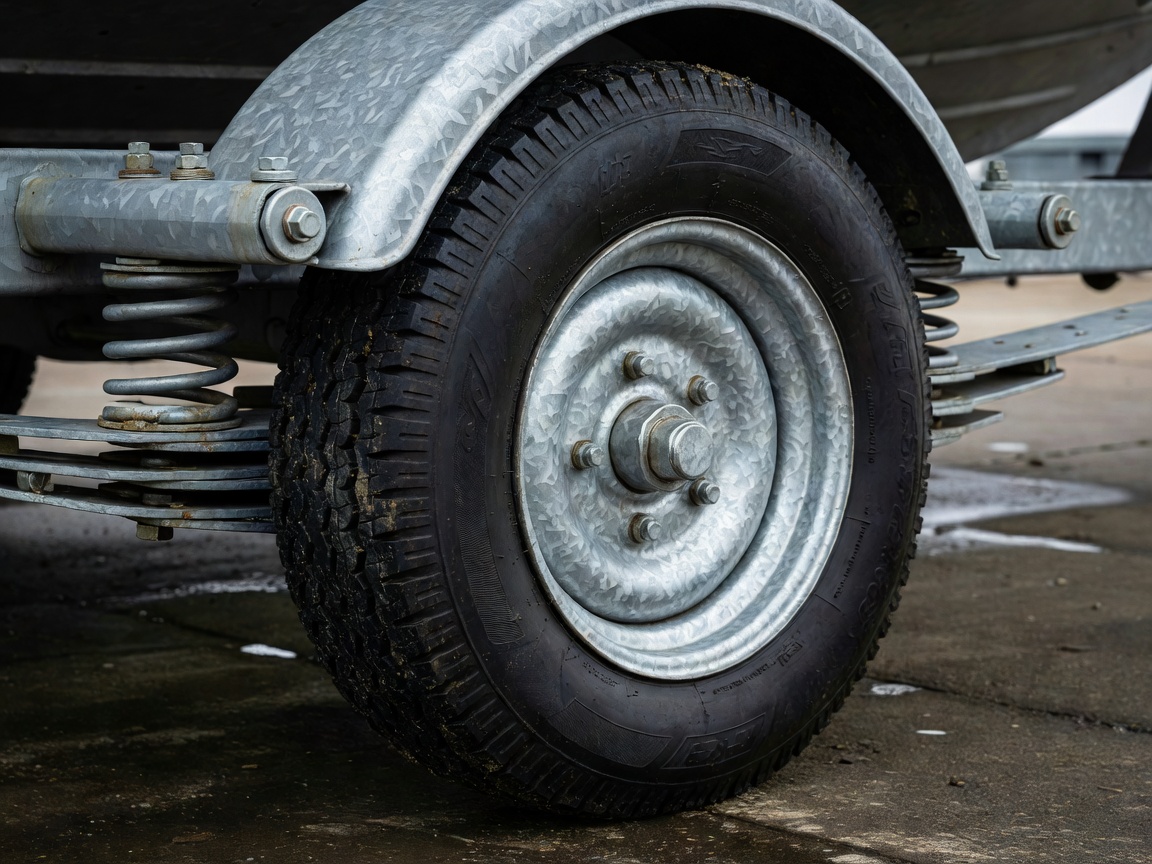
Start with the running gear
Wheels and tyres carry the trailer load and absorb road movement. Check for visible damage, uneven wear, age information and pressure requirements specified for the trailer and tyre. A tyre can look serviceable while still requiring professional assessment.
Bearings and hubs need attention based on the manufacturer’s maintenance schedule and operating conditions. Saltwater use, long storage periods and repeated launches may change the inspection priority. Bearing work should use qualified technicians and appropriate equipment.
Do not isolate the braking system
Brakes, cables, actuators and related components work as a system. Corrosion, contamination, seized parts or unusual operation require assessment by a qualified technician. This website does not provide brake repair instructions. Use manufacturer procedures and applicable local requirements.
Check lights and coupling components
Lighting should be reviewed before road movement. Look for damaged lenses, loose fittings, corrosion and connector issues. Electrical repairs should be assessed and completed using suitable procedures rather than improvised rewiring.
The coupling, safety connection points, jockey wheel and winch area deserve a separate visual review. Confirm that components match the trailer configuration. Never bypass a coupling safety feature or use an improvised towing system.
Frame condition and corrosion
Galvanized steel can show surface changes while retaining useful protection. Deep corrosion, cracks, deformation or damage around load-bearing areas needs professional assessment. Structural repair and welding should not be attempted without the right competence, procedures and equipment.
Advantages and limitations
A planned service schedule improves visibility of wear and creates useful records. It cannot predict every failure or replace a pre-use check. Maintenance also does not make an overloaded, incorrectly coupled or unsuitable trailer safe to tow.
Short checklist
- Review tyres, wheels and visible running gear.
- Use the manufacturer’s bearing schedule.
- Assess braking components professionally.
- Check lights, connectors and coupling areas.
- Record corrosion, damage and follow-up actions.
Good for
Frequently used trailers, saltwater operations, seasonal reopening and trailers preparing for regional transport.
What to check
Service records, component compatibility, tyre information, brake response, lighting condition, coupling wear, frame condition and any local road requirements.