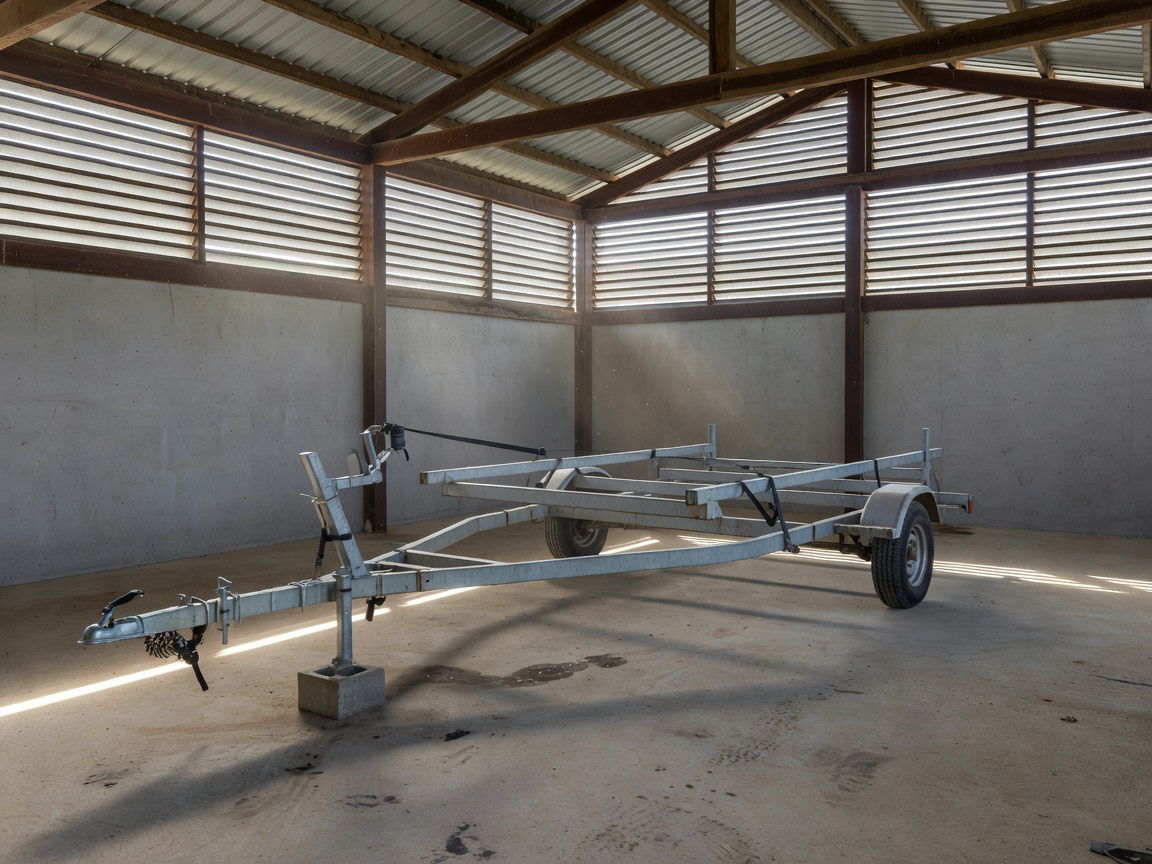
Choose the storage condition
Outdoor storage can be suitable when the site has secure access, stable ground and a clear drainage plan. Covered storage reduces direct exposure to rain, ultraviolet light and standing moisture. It does not remove the need for inspection.
Indoor storage may improve protection but can restrict trailer height, access hours or retrieval equipment. Confirm dimensions and movement rules before booking. A narrow access route can create more operational difficulty than the storage surface itself.
Prepare before the trailer is parked
Record the trailer condition at handover. Note tyre condition, visible corrosion, coupling position, winch area, lighting condition and any existing damage. Remove loose equipment that could move during storage. Keep documentation with the storage record, not inside an exposed trailer compartment.
Saltwater exposure deserves specific attention. Rinse and allow components to dry according to the manufacturer’s guidance. A storage provider should know whether the trailer was used in saltwater, freshwater or mixed conditions. This helps set the inspection priority.
Plan access and retrieval
Storage is useful only when retrieval is predictable. Confirm notice periods, opening hours, loading access, tow-vehicle requirements and the person authorised to collect the trailer. If transport follows storage, coordinate the handover point and documents early.
Advantages and limitations
Covered storage can reduce environmental exposure. Outdoor storage can be easier to access and may suit longer periods when the site is secure. Neither option replaces condition checks. Limited access, fixed opening times and shared-site movement rules are common constraints.
Short checklist
- Confirm covered or outdoor conditions.
- Record dimensions and access requirements.
- Document visible condition before handover.
- Confirm retrieval notice and authorised contact.
- Schedule a pre-use inspection before towing.
Good for
Seasonal owners, trailers between transport movements, long-term lay-up and operators who need a documented retrieval plan.
What to check
Ground stability, drainage, security arrangements, ventilation, access height, handling equipment, insurance responsibilities and the process for reporting damage.