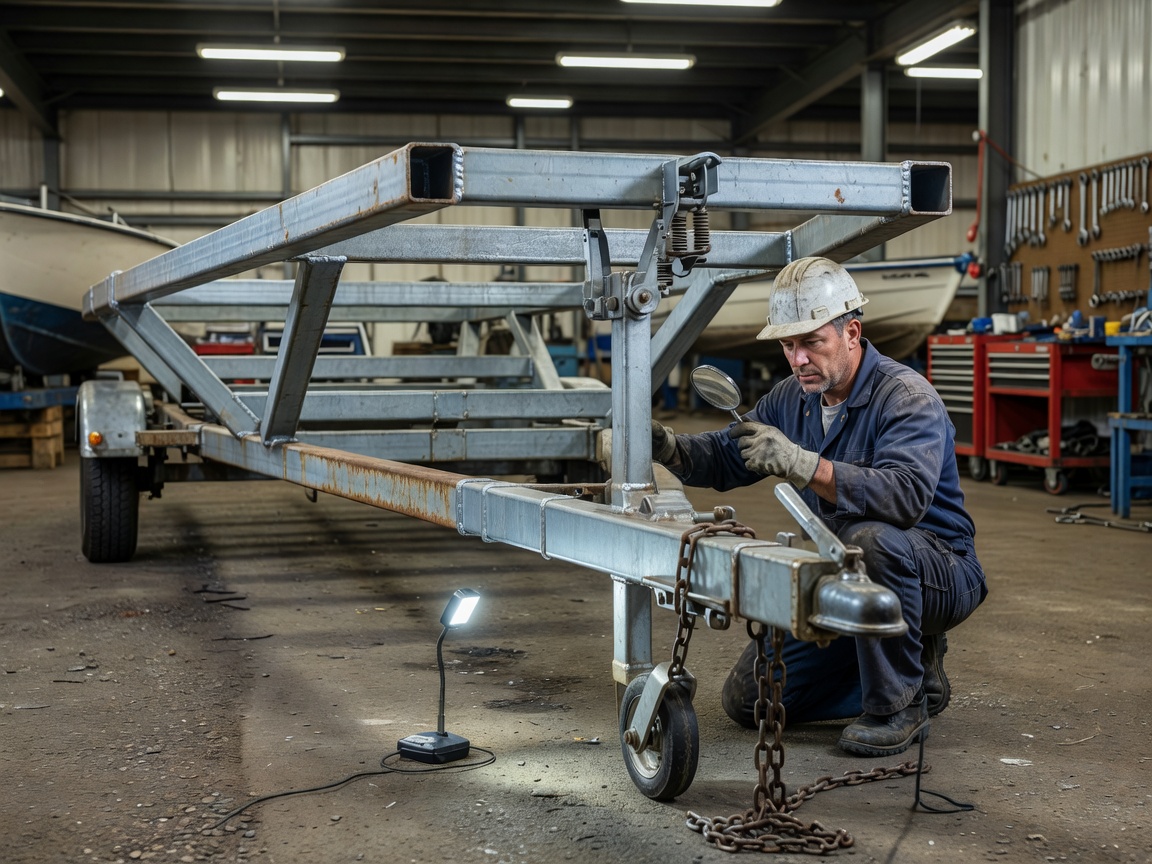
Define the inspection purpose
A pre-use review, storage intake check and repair assessment have different purposes. State whether the trailer is being prepared for road movement, seasonal launch, transport or longer storage. This gives the inspection a clear priority.
Review visible wear
Record damage, corrosion, deformation, loose fittings, tyre condition, lighting issues and coupling wear. Photographs and dated notes make follow-up easier. A visual review is useful, but it is not a substitute for testing or a professional engineering assessment where one is required.
Structure and load-bearing areas
Frame members, attachment points, rollers, supports and winch areas should be reviewed for obvious damage and condition changes. Load-bearing repair, welding or modification requires qualified technicians, manufacturer procedures and appropriate equipment. Do not tow a trailer when structural integrity is uncertain.
Braking and electrical systems
Braking components should be assessed as a complete system. The same applies to lights, connectors and wiring. Avoid improvised repairs, bypasses or unverified substitutions. A professional should identify the fault, compatible replacement category and any required functional checks.
Repair planning
Separate urgent safety concerns from routine work. Record the issue, affected area, evidence, recommended next action and whether the trailer should remain out of service. Request a written scope when repair work involves structure, brakes or coupling components.
Advantages and limitations
Documented inspection improves decision quality and helps coordinate storage, maintenance or transport. It does not certify a trailer, replace legal inspection processes or guarantee future condition. Requirements vary by location and trailer configuration.
Short checklist
- State the inspection purpose.
- Record visible wear and damage.
- Review structure, brakes, lights and coupling.
- Separate urgent issues from planned work.
- Use qualified technical assessment where needed.
Good for
Pre-season reopening, repair decisions, transport handover, storage intake and trailers with uncertain service history.
What to check
Inspection scope, dated records, photographs, manufacturer information, repair competence, replacement compatibility and applicable local requirements.