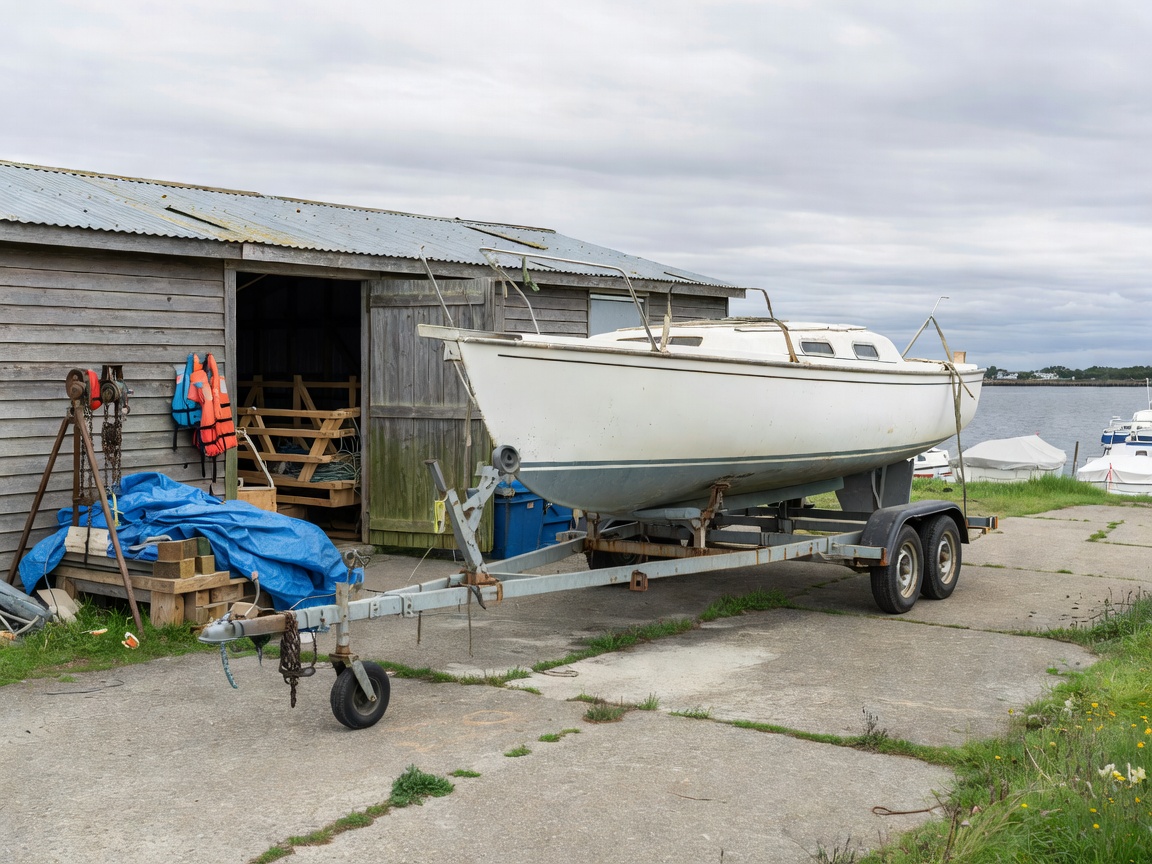
Spring preparation
Spring preparation starts with the storage record. Review what was noted at closure, then inspect the trailer before loading or towing. Check tyres, wheels, visible corrosion, lights, coupling components, winch areas and support points. Any uncertainty around brakes, bearings or structure should go to a qualified technician.
Winter preparation
Winter closure should account for the storage location, moisture, freezing conditions, salt exposure and expected access. Clean and dry the trailer according to manufacturer guidance. Record condition and planned work before it becomes difficult to access the trailer.
Saltwater exposure
Saltwater can increase corrosion risk on metal, fasteners, connectors, hubs and braking components. Rinsing may be appropriate, but the correct method depends on the component and manufacturer guidance. Cleaning does not replace inspection. Record repeated exposure so future service planning has useful context.
Pre-use inspection
Before road movement, confirm that the trailer configuration is suitable, the load is stable and the coupling system is correctly used. Review lights, tyres, wheels and visible damage. This is an operational check, not a substitute for a formal inspection or professional repair assessment.
Post-season checks
At the end of use, record new damage, unusual noises, loading issues and any parts that need attention. Schedule repairs before the next season. Early planning can make storage and workshop access easier, but no work should be performed outside the competence and equipment available.
Advantages and limitations
A seasonal process prevents the storage period from becoming a forgotten gap. It supports better records and scheduling. It cannot remove environmental deterioration or guarantee that a trailer will be roadworthy without a proper assessment.
Short checklist
- Review the previous condition record.
- Assess tyres, wheels, lights and coupling.
- Record saltwater exposure and corrosion.
- Schedule qualified work early.
- Confirm readiness before road movement.
Good for
Trailers used in tidal areas, seasonal boating, winter lay-up, spring launch planning and storage-to-transport transitions.
What to check
Storage condition, environmental exposure, service history, visible damage, road-use timing, access to qualified technicians and applicable local requirements.